11 Tips for your first pen show
If I had five dollars for every time I’ve heard “There are such things as pen shows?” I could retire. Yes, pen shows are a thing! This is how my B2B brain takes a break. Here are 11 tips for attending your first show – or five.
Not sure what to expect at a pen show? Start here.
Fair warning: the pen world is highly addictive, especially if you’re a writer. And it’s a great way to support small business owners. Pen shows also attract journalers and readers. Here’s more on what to expect at a pen show.
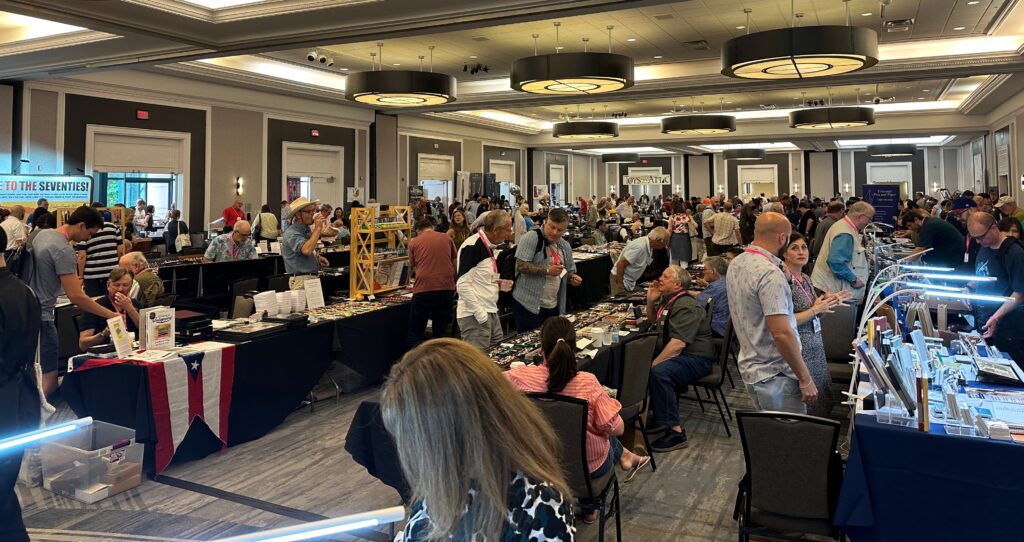
There will be pens. More pens than you’ve ever seen in one space in your life. There will also be inks, stationery, pen cases, and nibmeisters (folks who work on fountain pen nibs … that’s the pointy end piece where the ink comes out when you’re writing with one).
Depending on the show, you’ll also see places where you can test ink. The individual ink vendors usually have a set-up at their table; other pen shows set up a whole single area at the venue just for trying out fountain pen inks. For example, the Miami Pen Show has an Ink Bar for that very purpose, while the Washington, D.C. Fountain Pen Supershow (the largest pen show in the world) simply doesn’t have room for that.
There will also be a few vendors who sell pen-adjacent goods such as pen holders, stickers, washi tape, journals, t-shirts, pen-themed hats and coffee mugs, fountain pen pins, bookmarks, and more. One example is The Write Stuff LLC, but there will be more.
You’ll be overwhelmed. But that’s okay … just take a deep breath and put one foot in front of the other. Keep reading for more of what to expect, as well as general pen show etiquette.
11 pen show tips every new attendee should know
- Know that it’s mostly pens, but other stuff too. It’s worth saying again: you’ll see more pens in one place than you’ve ever seen in your life. However, don’t ignore the pen-adjacent goodies: high-quality stationery, notebooks, and journals; pen holders; ink; accessories for traveling with pens; pen storage options; and even stickers, t-shirts, and reusable bags.
- Walk the entire show before buying anything. Don’t buy from the first vendor through the front door. Yes, that pen is the coolest/wildest/most perfect one you’ve ever seen…until it isn’t. Keep walking. Walk around the outside perimeter, then up and down the interior aisles. Make a note of which vendors have pens and writing accessories that interest you, then go back around. Take in the whole show before your wallet ever sees daylight.
- Set a budget before going. You’ll see great beginner pens that are around $20-$30. You’ll see even more between $100 and ~$300. My brother-in-law, Robert, frequently helps a friend with his five tables at shows; this friend has had a pen worth $5,000 (the Pelikan Lighthouse of Alexandra) for sale at some shows. The most expensive fountain pen I’ve ever heard of is the Fulgor Nocturnus, Latin for “night glow”, by Tibaldi in Italy. It sold at a charity auction for a cool $8 million. That stunningly beautiful pen is adorned with rare black diamonds. Remember, many pens are handmade by master penscrafters, rare black diamonds or not. So…decide what you’ll spend before you go.
- Ask permission before picking up a pen. This is considered good pen show etiquette. Most pens you’ll see have been designed and hand-crafted by the business owner and may be the only one of its kind. They’ll likely let you hold it and look closer—but ask first.
- Be aware of nib sizes. Nibs are the pointy end piece you see on a fountain pen…that’s where the ink feeds from the inside of the pen and out onto your paper as you write. Much like other pens, they come in such “sizes” as Fine, Extra Fine, Medium, and Broad (my fave, the equivalent of Bold). I made this mistake with a Kaweco, so learn from me: ask what nib is already on the pen you’re buying. If you prefer another size, most vendors will be able to swap it on the spot. (Exception: If it’s a vintage pen, this likely will not be possible.)
- Know what pens costs on the manufacturers’ sites. This can be a useful tool for haggling on price.
- Bring some cash with you. Vendors are business owners; they know cards are convenient for most shoppers and do accept them. Cash, though, doesn’t charge fees… it’ll also be handy for any vendors who don’t accept plastic.
- Know that some vendors may be willing to haggle on price, depending on the item. They may say no, but it doesn’t hurt to ask. Especially if you bring cash.
- Remember the ink! That beautiful new pen won’t do a darn thing without ink. Especially if it’s your first fountain pen, remember to get ink for it. I was so excited I nearly made this mistake too. Tip: See if you can buy a sampler set from a vendor at the show. These will be smaller bottles but the set will contain several colors to start playing with.
- Try inks first. Sit down at tables with ink color swatches and see what you think. These vendors should be easy to spot because they may have chairs at their tables. They’ll have sample bottles available to try All. The. Inks. Some pen shows may have a whole separate area set up for this, but this varies by show.
- Plan ahead for any seminars or workshops that you’d like to attend. Pen shows can have a variety of other pen-related activities that may interest you – these are separate from the actual show floor itself. These events will vary; check each show’s website and social media for what’s happening and how to register, especially if they recommend reserving a seat in advance.